
A Camper’s Day at DGPA Summer Camp
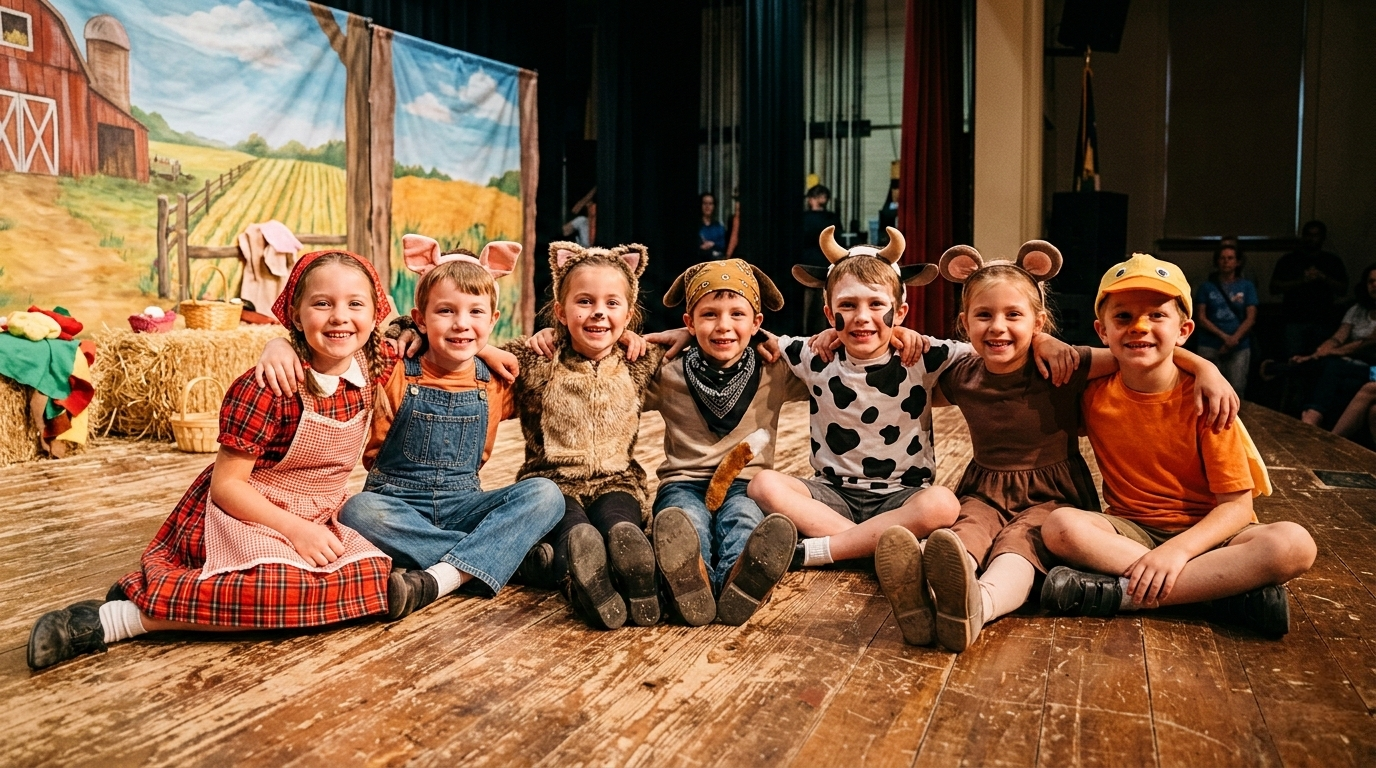
Our summer camp isn’t just fun; it’s an immersive, exhilarating journey where students build a community, grow closer to God, and experience the unparalleled joy of bringing an entire theatrical production to life in just one week.
The experience of putting on a show is hard to describe. It’s a mix of adrenaline, creative puzzle-solving, and pure teamwork. When the final curtain rises, the campers aren't just performing lines they memorized; they are sharing a piece of their heart, showcasing a world they helped build with their own two hands, and using their talents to glorify the one who gave them those gifts.
If you’ve ever wondered what it looks like to compress months of theatrical production into the best weeks of the summer, here is a detailed look at what a day at DGPA Summer Camp is really like.
The Pre-Camp Preparation
Our camps move quickly, which is why the work actually begins before Day One. To maximize our time together, every student auditions ahead of camp and is assigned a specific role (or ensemble part) weeks in advance. This means that when they arrive on the very first day, they already have their scripts in hand with their lines already marked and mostly memorized. This pre-camp preparation is key to our success; it allows us to hit the ground running, shifting immediately from simple reading to active creation.
The Daily Schedule
A typical day at camp is carefully structured to balance high-intensity rehearsals with necessary breaks and technical training.
Morning Start Every single day at camp begins with a dedicated time of devotion and worship. We gather as a full cast to ground ourselves in the Word of God, pray together, and use our musical talents to worship Him. This time is crucial—it reminds our campers that their gifts are a form of praise and that the ultimate goal of the show is not applause, but ministry and worship.
The Rehearsal Block Following worship, the day shifts into high-gear performance training. The mornings are usually packed with various rehearsals.
Blocking a Scene: This is when the director maps out exactly where everyone stands and how they move during a scene. It’s like a giant puzzle where we ensure the audience can see everyone and the story is clear.
Working on a Dance: The choreography rehearsals are high-energy! We break down dance numbers step-by-step to ensure the choreography is crisp, professional, and enhances the storytelling.
Learning a Song: Our music directors work hard on vocal technique, harmonies, and dynamics. We move from just learning notes to singing with passion and purpose.
Character Development: This is often the most impactful part of rehearsal. We don't just ask campers to recite lines; we help them understand who their character is, what they want, and how that relates to the overall message of the show.
Lunch and Fun! Even the most energetic performer needs a break. We break for lunch, providing essential refueling time. But this isn't just quiet eating. Following lunch, we often have a designated Fun Time filled with group games, laughter, and activities designed simply to let the kids be kids and build genuine friendships.
The Afternoon Push After a refreshing break, it’s back to work. The afternoon block usually involves applying the morning’s work, combining scenes and songs, or repeating sections to build stamina and polish. Campers keep pushing right up until pickup time, working hard to get every detail perfect.
Beyond the Spotlight: The Teams
What makes DGPA camp truly unique is that the learning doesn’t stop when you step into the wings. When you are not actively on stage, you are not just sitting around. At DGPA, we believe every aspect of production is an art form.
Each camper is assigned to one of four specialized Teams. Anytime they are not actively blocking a scene or in a specific rehearsal, they gather with their team to learn a new skill and immediately apply it to the production. These campers aren't just helpers; they are the creative engine that helps bring the show to life even when they are not in the spotlight.
Here is a look at our four incredible Teams:
1. The Hair and Makeup Team This team learns the transformative power of theater makeup. This crew learns techniques for:
The Basics of Hair: Learning various hairstyles, from simple braids to more complex updos that can withstand high-energy dance numbers.
The Art of the Stage Makeup: Learning how to apply theater makeup products that won't wash out under intense stage lights and how to highlight facial features so they can be seen from the back of the house.
Serving the Cast: Hands-on experience of doing the hair and makeup for other cast members, ensuring everyone looks their best and feels confident before taking their place in the spotlight.
2. The Props Team If an actor holds it, touches it, or uses it, it is a prop—and the Props Team makes sure it’s perfect. They focus on:
Sourcing and Creation: Hunting down difficult items or using crafting skills (sculpting, painting, repurposing) to create props from scratch.
The Props Table: Organizing a massive backstage table where every single item must be precisely placed for easy access during the show.
Run of Show: During the performances, they manage the props backstage, ensuring everything is available at the exact moment an actor needs it.
3. The Sets Team This team responsible for creating the physical environment the audience sees. Their work includes:
Painting Scenic Backdrops: Learning large-scale painting techniques, texturing, and understanding perspective to create realistic (or imaginative) backdrops.
Building Sets: Learning basic, safe construction techniques to build the physical elements used in the show.
Scenic Design: Understanding how colors and shapes affect the mood of the scene.
4. The Costumes Team This team dresses the entire cast and makes sure they feel comfortable and ready. Their duties include:
Measurements and Fittings: Learning how to take accurate professional measurements (a vital skill!) and ensuring every costume fits perfectly.
Costume Design: Picking out which items fit together and how they help tell the story.
Organization and Alterations: Keeping the costumes organized and clean, learning basic sewing and repair skills to handle wardrobe emergencies during the show run.
A Summer Like No Other
At the end of camp, all these separate, beautiful pieces—the blocking, the dancing, the sets, the props, the costumes, the hair and makeup—collide on performance day to put on an absolutely incredible show.
DGPA Summer Camp is an unforgettable opportunity. It is a time for young performers to dramatically grow their theatrical skills (both on stage and off), to meet a community of like-minded creators, and most importantly, to grow closer to God. When they take that final bow, they aren't just finished with a camp; they are energized, empowered, and strengthened in their faith and their craft.
We can’t wait to see you center stage! Check out what our summer camp offerings!